How to Market a Restoration Company in 2026
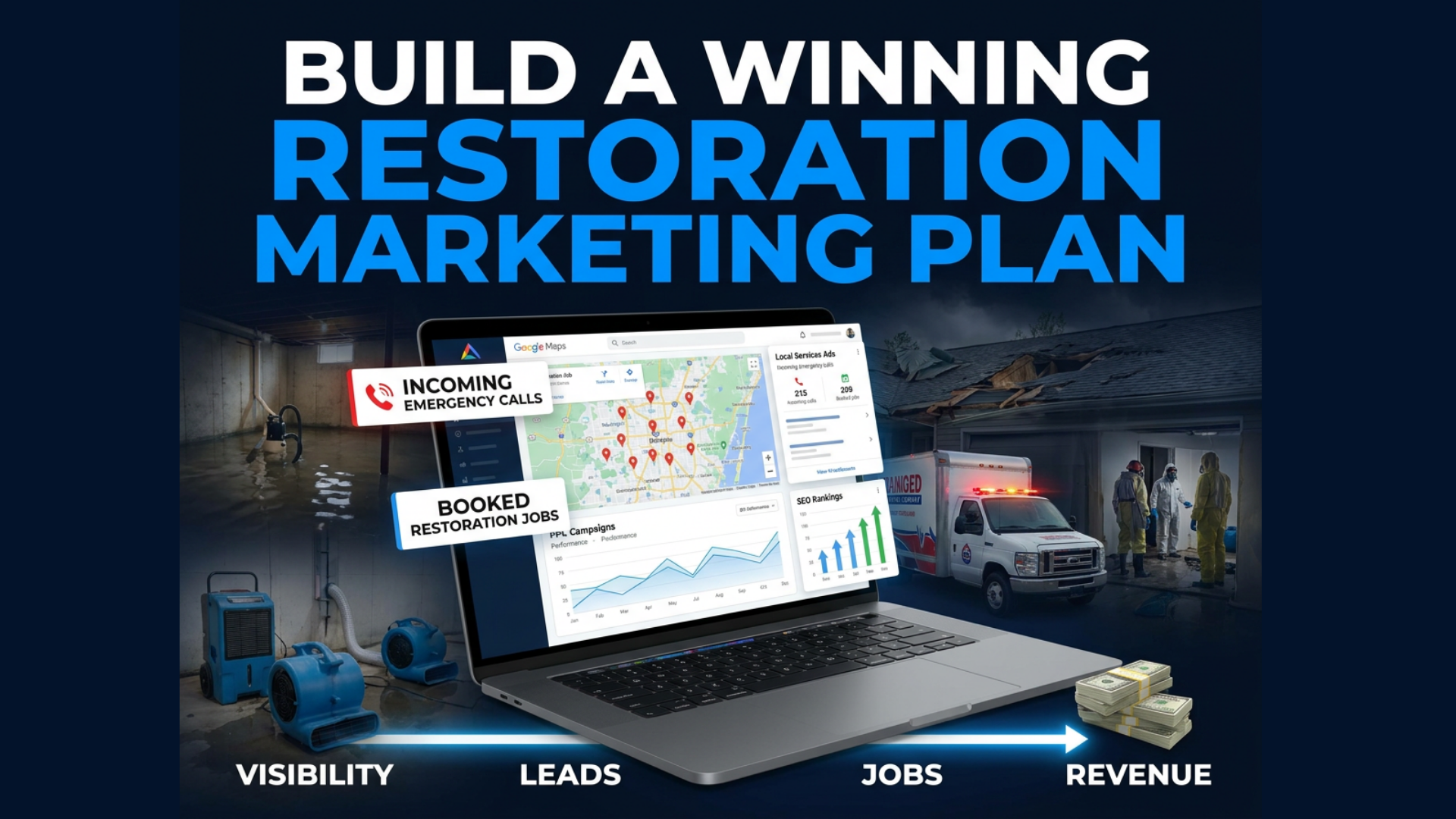
Restoration marketing in 2026 requires more than referrals or one advertising platform. This guide explains how to combine Google Business Profile, Local Services Ads, PPC, local trust, and neighborhood marketing to generate more qualified restoration opportunities.

Peyton Roop
Founder, Promotive Marketing
Published
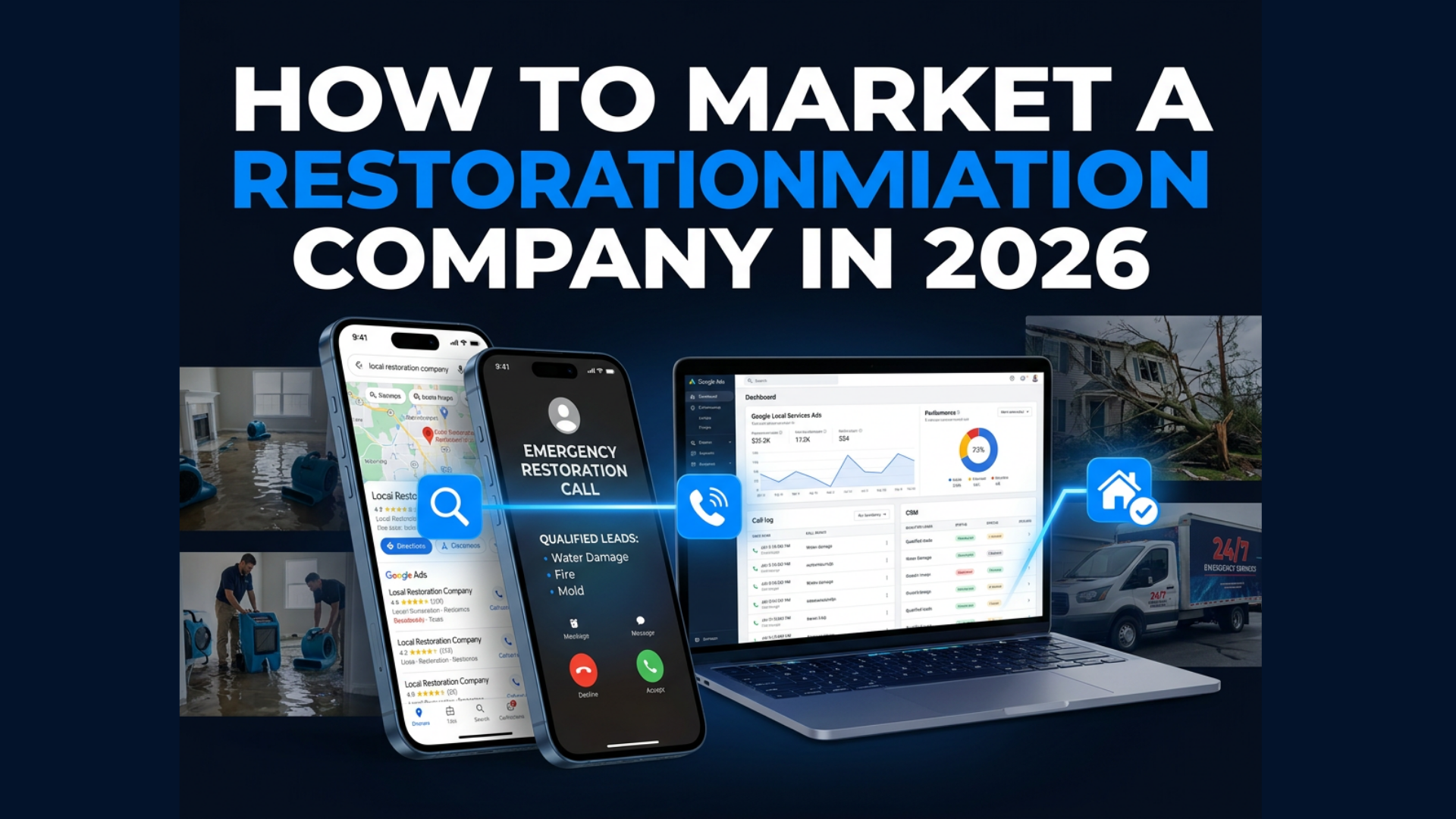
How to Market a Restoration Company in 2026
Restoration customers do not plan when they will need help. A pipe bursts, a storm damages the home, or water starts entering the basement, and they immediately search for a company that can respond.
The restoration companies winning in 2026 are not depending on one source of leads. They are building a connected system that helps homeowners find them, trust them, contact them, and receive a fast response.
Here are six areas to focus on when marketing your restoration company.
1. Optimize Your Google Business Profile
Your Google Business Profile is often one of the first things homeowners see when searching for water, fire, mold, or storm restoration.
Google says businesses with complete and accurate information are more likely to appear in relevant local results. Your profile should accurately communicate your services, phone number, hours, website, service areas, reviews, and project photos.
Review these areas:
- Primary and secondary categories
- Emergency availability
- Phone number and call routing
- Service areas
- Water, fire, mold, and storm services
- Recent project photos
- Customer reviews
- Website link
Only list 24-hour availability when someone can genuinely answer and respond. An emergency homeowner who sees that you are open but reaches an unattended voicemail will probably call another company.
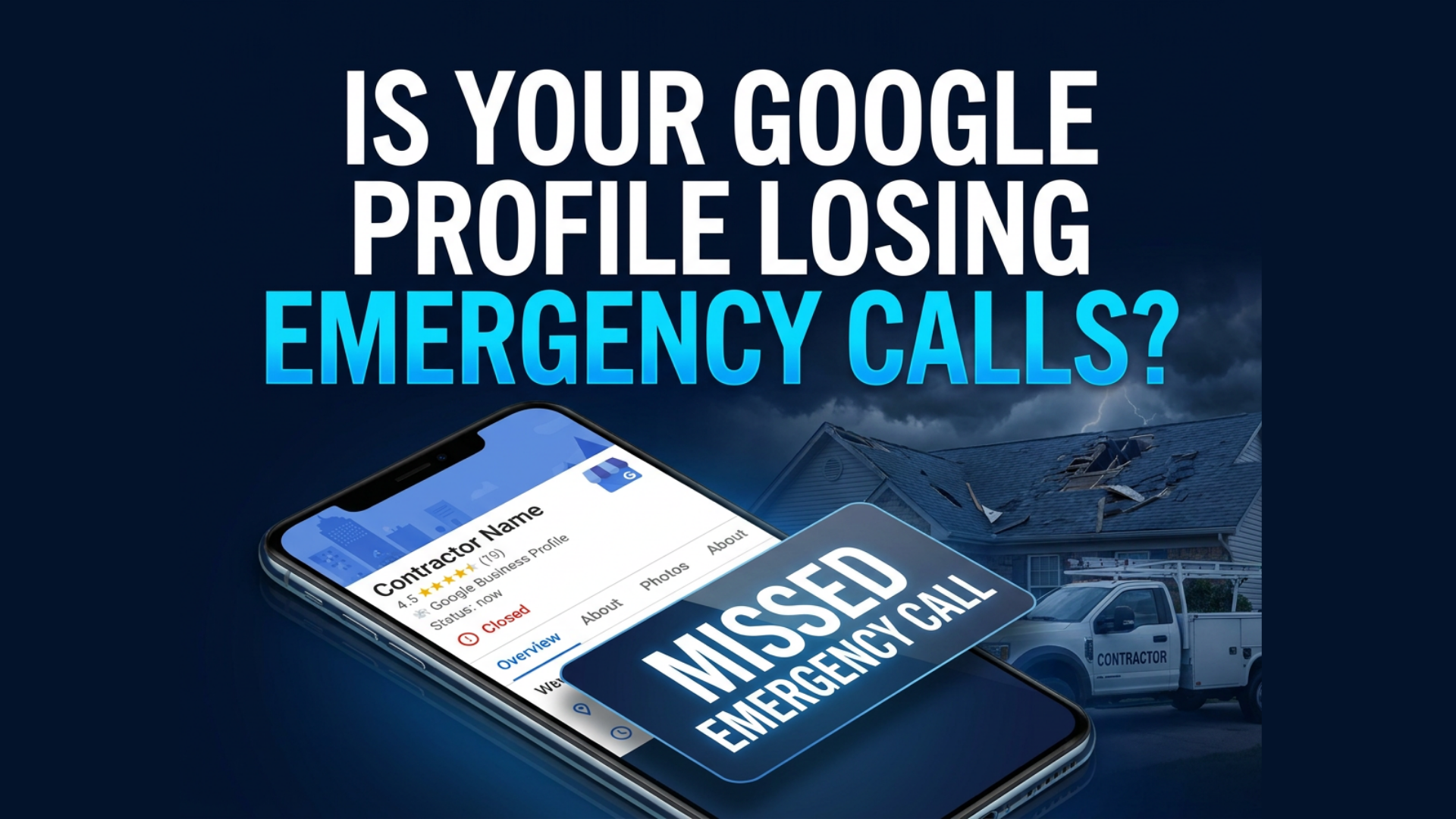
For a deeper walkthrough, read our guide on why Google Business Profiles lose emergency calls.
2. Use Local Services Ads Where Available
Local Services Ads can help eligible restoration companies appear prominently when homeowners search for nearby services. Customers can call or message through the ad, while the listing highlights information such as services, service areas, hours, and reviews.
Eligibility and screening requirements vary by service and location. Confirm that restoration services are available in your market before building your strategy around them.
Once your account is active, select only the job types and service areas you can handle. Google uses those settings to determine which searches may trigger your Local Services Ad.
Your results also depend on what happens after the lead comes in. Keep your hours accurate, answer quickly, add real project photos, request reviews, and track which calls turn into jobs.
3. Build Focused Google PPC Campaigns
Local Services Ads can provide valuable visibility, but they do not offer the same control over keywords, ad messaging, budgets, and landing pages as traditional Google PPC.
A focused Google Ads campaign allows you to target high-intent searches and send each customer to a page built around the exact problem they are experiencing.
Separate campaigns by service instead of advertising everything together. Water damage, fire restoration, mold remediation, sewage cleanup, and storm response should have their own keywords, ads, budgets, and landing pages.
Start with searches such as:
- Emergency water damage restoration
- Water extraction company near me
- Flooded basement cleanup
- Fire damage restoration
- Smoke damage cleanup
- Mold remediation company
- Storm-damage restoration
Add negative keywords for searches involving jobs, salaries, training, certifications, DIY instructions, supplies, and equipment rentals. You should also exclude restoration services your company does not provide.
Keep your location targeting aligned with your actual response area. Google Ads allows advertisers to target specific cities, regions, ZIP codes, or a radius, while advanced settings determine whether ads reach people physically located in an area, interested in it, or both.
Each campaign should send visitors to a focused landing page with a clickable phone number, short emergency form, service areas, reviews, certifications, and real restoration photos.
Google removed the option to create new call-only ads in February 2026 and recommends responsive search ads with call assets. Existing call-only ads are scheduled to stop receiving impressions in February 2027.
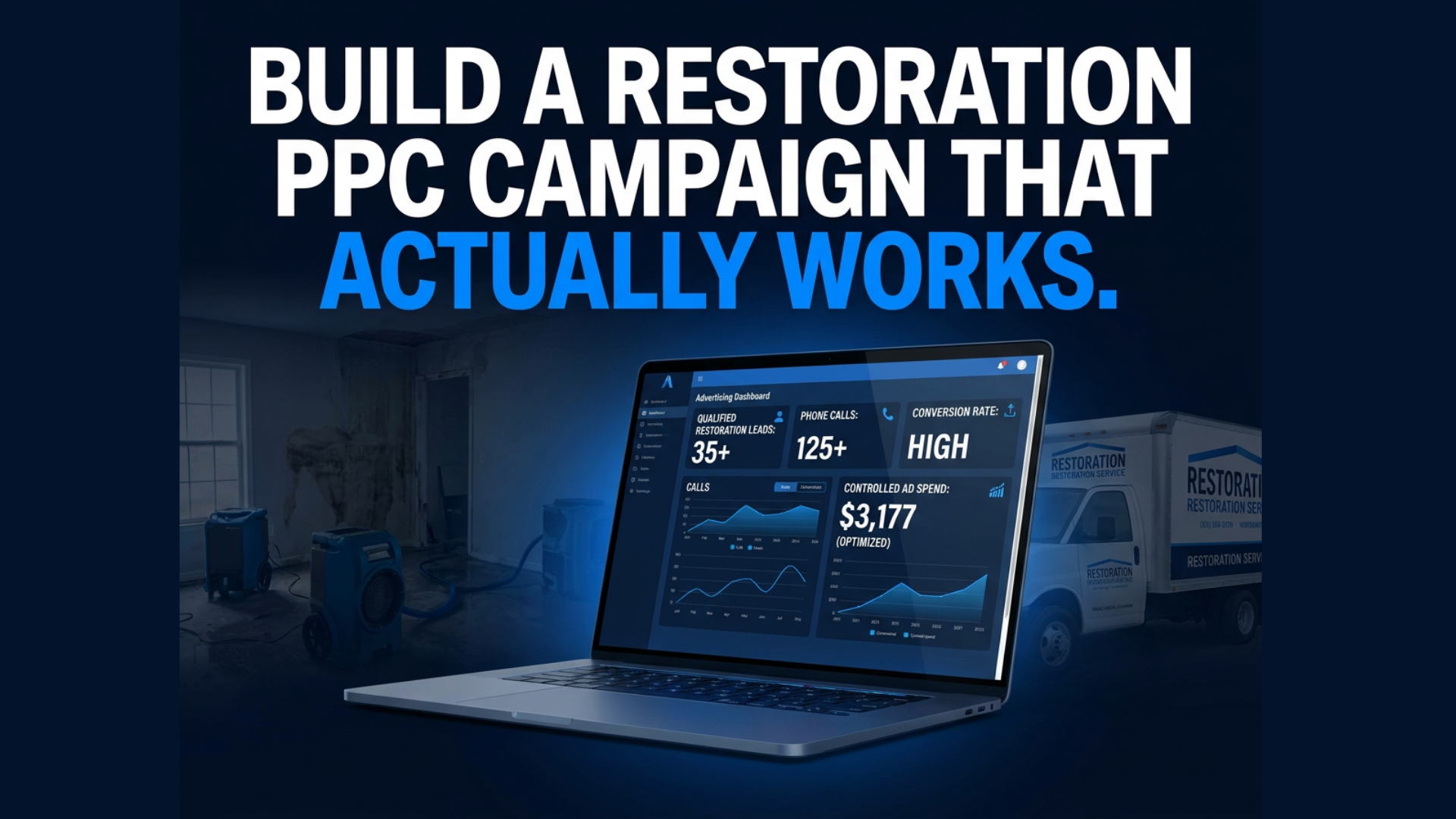
For the complete setup process, read our guide on how to build a successful restoration Google PPC campaign.
“Do not build your restoration marketing around one source of leads. Make sure homeowners can find you, trust you, and reach someone who is ready to respond.”
Peyton Roop
Owner of Promotive Marketing
4. Build Organic Visibility Around Each Service
Paid advertising can create faster lead flow, but your company should not have to pay for every opportunity forever. Your website and local SEO should help you build authority around the services and markets you want to grow.
Create dedicated pages for:
- Water damage restoration
- Emergency water extraction
- Fire and smoke restoration
- Mold remediation
- Sewage cleanup
- Storm-damage restoration
- Commercial restoration
Each page should explain the problem, your response process, the areas you serve, and how the homeowner can request help. Support those pages with useful articles answering the questions customers ask before hiring a restoration company.
Avoid creating dozens of nearly identical city pages. Each service or location page should offer useful, specific information instead of changing only the city name.
5. Use the STAR Pattern on Every Project
Most restoration contractors complete the work, load their equipment, and leave the neighborhood. The STAR Pattern turns each project into five additional conversations without making a cold sales pitch.
Before or shortly after work begins, introduce yourself to the five closest neighbors. Hand them a business card and explain that you are available if they have any questions while your team is working nearby.
Never share private information about the homeowner or the emergency. The goal is to create a friendly introduction while you have a legitimate reason to be in the neighborhood.
Use this script:
“Hi, I’m [Your Name] with [Company]. We’re completing a restoration project nearby, and I wanted to introduce myself. Here’s my card in case you have any questions while we’re working or ever need help with your home. We’d be happy to provide an estimate and see if we’re a good fit. Thanks, and have a great day.”
The goal is not to pressure someone at the door. You are building familiarity and positioning your company as the first contractor they think of when they need restoration help.
Five conversations from every completed project can create valuable local awareness without increasing your advertising budget.
6. Turn Completed Jobs Into Trust
Every completed restoration project should strengthen your future marketing.
After the customer is taken care of, request an honest Google review. With permission, capture photos of your crew, equipment, restoration process, and completed work.
Use those projects to create:
- Google Business Profile photos
- Website case studies
- Social media content
- Local Services Ads photos
- Before-and-after examples
- Educational articles
One project should produce more than one invoice. It should create the proof that helps the next homeowner trust your company.
Your 2026 Restoration Marketing Checklist
Make sure your company has:
- A complete Google Business Profile
- Accurate emergency hours and call routing
- Local Services Ads where available
- Service-specific Google PPC campaigns
- Focused landing pages
- Dedicated website service pages
- Recent reviews and project photos
- A STAR Pattern neighborhood process
- Call and form tracking
- A clear after-hours response plan
You do not need to launch everything at once. Identify the area currently costing you the most opportunities, fix it, and then strengthen the next part of the system.
The Next Problem: Can Your Team Handle the Leads?
Better marketing can create more calls, but it cannot guarantee that your team responds properly. Emergency restoration leads move quickly, and a homeowner may hire another company before your team returns a missed call.
That is the next problem improved marketing often reveals.
Your business needs clear on-call responsibilities, missed-call text back, immediate notifications, CRM tracking, and consistent follow-up. More visibility only creates healthier growth when the pipeline behind it is ready.
Promotive approaches contractor growth through Trust, Visibility, Pipeline, and Readiness because more leads alone will not fix broken follow-up or a business that is not prepared to respond.
Build a Stronger Restoration Marketing System
Promotive helps restoration companies improve Google visibility, paid advertising, reviews, landing pages, call tracking, and the systems that handle opportunities after they arrive.
The goal is not random activity or more clicks. It is a connected system that generates qualified opportunities and helps your company turn more of them into restoration jobs.
Free Tools
Written By
Peyton Roop
Founder, Promotive Marketing
Want This Running
In Your Business?
One call, a straight read on what is slowing growth down, and a plan you can act on whether you hire us or not.


Marketing and growth systems for roofing, exterior, and home service contractors. Built by people who have run a contracting business.
Bloomington and Peru, Illinois
Serving contractors nationwide
Monday to Friday, 8 to 5 CST
© 2026 Promotive Marketing LLC. All rights reserved.