2026 Restoration Marketing Plan That Wins More Jobs
A winning restoration marketing plan should not depend on referrals, storms, or one advertising platform. Learn how to connect Google visibility, paid advertising, SEO, reviews, local outreach, and lead follow-up into a more predictable growth system.

Peyton Roop
Founder, Promotive Marketing
Published
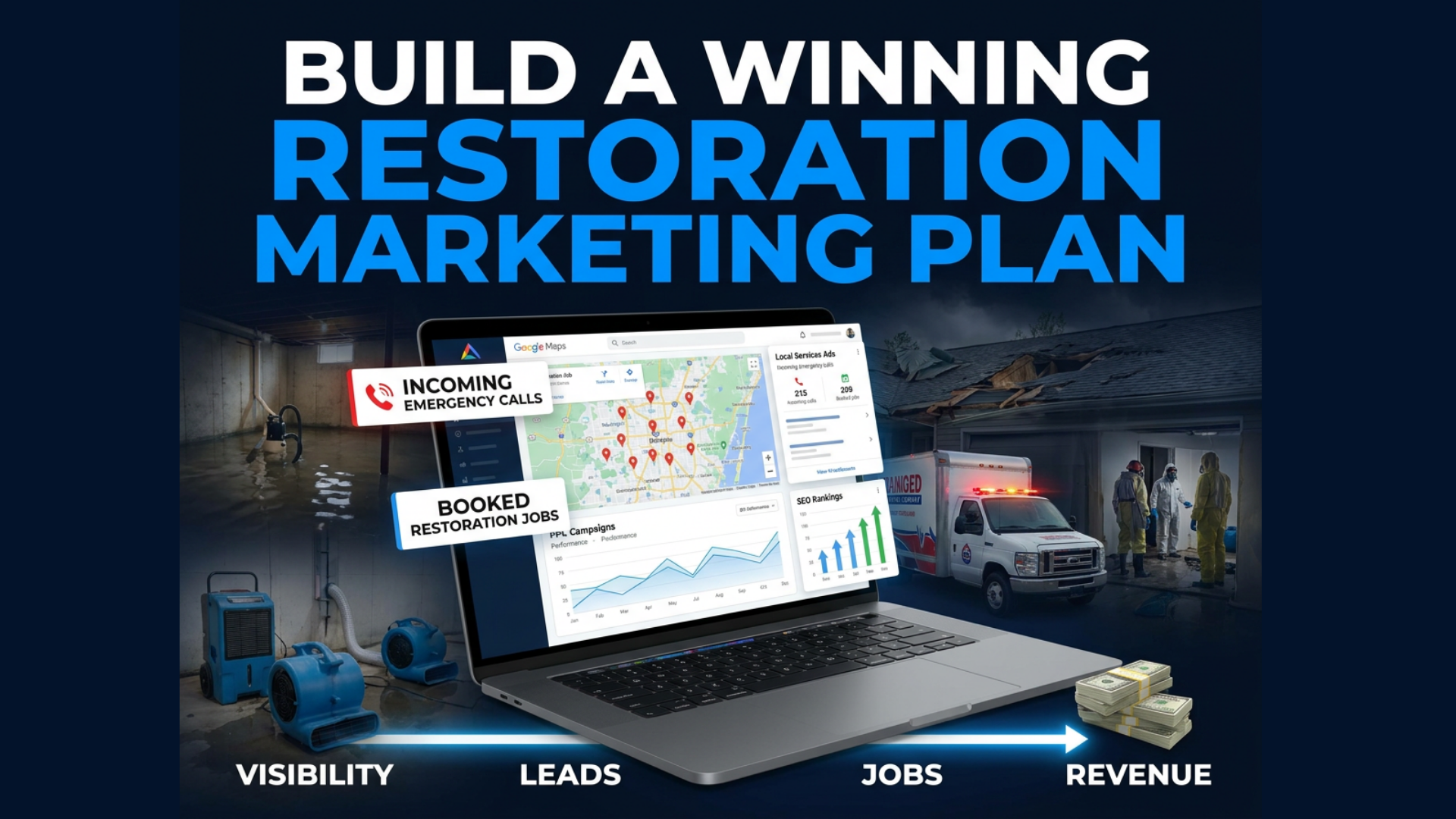
Your 2026 Restoration Marketing Plan Should Not Depend on One Lead Source
Many restoration companies do not have a real marketing plan. They rely on referrals, weather events, insurance relationships, or one advertising platform and hope enough work comes in each month.
That works until referrals slow down, ad costs rise, or the market goes quiet. A stronger restoration marketing plan connects multiple lead sources with the systems needed to turn opportunities into booked jobs.
Here is how to build that plan for 2026.
1. Start With the Revenue Goal
Do not choose marketing tactics until you know what the business needs to produce. Start with your annual revenue goal, average project value, close rate, and operational capacity.
Calculate:
- Jobs needed to reach the goal
- Qualified leads required
- Monthly lead target
- Acceptable cost per lead
- Marketing budget needed
- Crew capacity required
Use Promotive’s free Revenue Goal Planner to reverse-engineer your target into jobs, leads, and estimated advertising investment.
A marketing plan should be built around a measurable business goal. Otherwise, it becomes a list of activities with no clear definition of success.
2. Strengthen Your Google Business Profile
Your Google Business Profile helps restoration customers find and evaluate your company in Search and Maps. Google says complete and accurate business information can improve your ability to appear for relevant local searches.
Review your:
- Primary and secondary categories
- Emergency services
- Business and holiday hours
- Phone number
- Service areas
- Website link
- Project photos
- Customer reviews
Upload current photos showing water extraction, containment, drying equipment, crews, trucks, and completed projects. Your profile should immediately communicate what you do, where you work, and whether someone is available to respond.
Read our guide on fixing a Google Business Profile that may be losing emergency calls for a complete checklist.
3. Capture Immediate Demand With LSA and PPC
Restoration marketing needs a way to reach homeowners who are actively searching for urgent help. Local Services Ads and Google PPC can both support that goal, but they serve different purposes.
Use Local Services Ads Where Eligible
Local Services Ads highlight information such as your services, hours, service area, and reviews. Availability and screening requirements vary by category and location, so confirm that your business is eligible before depending on LSA as a primary lead source.
Select only the job types and locations your team can serve. Google uses those settings to determine where your ads may appear and which searches can trigger them.
Review our guide to Google Local Services Ads for restoration companies before launching.
Use Google PPC for Greater Control
A focused Google Ads campaign gives you more control over keywords, ad messaging, budgets, service areas, and landing pages.
Separate campaigns by service:
- Water damage restoration
- Emergency water extraction
- Fire and smoke restoration
- Mold remediation
- Sewage cleanup
- Storm-damage restoration
Each campaign should lead to a page built around that exact service. Avoid sending every click to a generic homepage.
Google removed the ability to create new call-only ads in February 2026. Restoration advertisers should now use responsive search ads with call assets when phone calls are a primary conversion goal.
Read our complete guide on building a successful restoration Google PPC campaign.
“Do not build your entire restoration plan around one lead source. Use paid visibility to create demand now, then build reviews, SEO, and follow-up systems that keep producing value over time.”
Peyton Roop
Owner of Promotive Marketing
4. Build Long-Term SEO and Local Authority
Paid advertising can generate opportunities faster, but your company should not have to pay for every lead forever. SEO helps your business build visibility around the restoration services and markets you want to grow.
Your website should include dedicated pages for:
- Water damage restoration
- Fire and smoke restoration
- Mold remediation
- Sewage cleanup
- Commercial restoration
- Emergency restoration
- Important service areas
Each page should explain the customer’s problem, your process, qualifications, service area, and next step. Use real project photos, customer questions, local experience, and helpful information instead of publishing thin pages that repeat the same keywords.
Support those pages with useful articles that answer specific homeowner questions. The goal is not publishing more content just to stay active. The goal is building helpful information that strengthens your authority and leads customers toward the right service.
5. Turn Every Project Into Future Opportunities
Every completed restoration project should create more than one invoice. It should also produce reviews, photos, referrals, neighborhood awareness, and proof that helps the next homeowner trust your company.
After the project is complete:
- Request an honest Google review
- Capture before-and-after photos with permission
- Create a short project case study
- Add photos to your Google Business Profile
- Share the project through email and social media
- Ask whether the customer knows anyone else needing help
You can also use the STAR Pattern. Introduce yourself to the five closest neighbors, give them a business card, and let them know you are available if they have questions while your crew is working nearby.
Do not pressure anyone or share private information about the customer’s emergency. The goal is to create five warm introductions while your company is already visible and trusted in the neighborhood.
6. Track Every Opportunity Through the Pipeline
Your marketing plan is incomplete if it ends when the phone rings. Every call, message, and form submission should enter one pipeline with an assigned owner and clear next step.
Track:
- Lead source
- Call answer rate
- Response time
- Qualified opportunities
- Inspections scheduled
- Estimates sent
- Jobs won
- Revenue generated
- Cost per booked job
A lead without a follow-up system can easily become wasted marketing spend. Your team should know who owns the opportunity, when the next contact attempt will happen, and where the lead stands.
Use the Missed Call Calculator to estimate how much potential revenue unanswered calls may already be costing your restoration company.
Your 2026 Restoration Marketing Priorities
Your plan should include:
- A measurable revenue and lead goal
- A complete Google Business Profile
- Local Services Ads where available
- Service-specific Google PPC campaigns
- Dedicated landing pages
- Strong service and location pages
- A consistent review process
- The STAR Pattern on completed projects
- Call and form tracking
- Missed-call recovery
- CRM follow-up
- Monthly performance reviews
You do not have to launch everything at the same time. Start with the area currently costing the business the most opportunities, fix it properly, and then strengthen the next part of the system.
The Next Problem: Can Your Team Execute the Plan?
Creating a restoration marketing plan solves the immediate problem of knowing where opportunities should come from. It also reveals whether your team can consistently respond, track, and follow up with those opportunities.
More marketing will not fix missed calls, slow response times, forgotten estimates, or an unclear sales process. It may only create more wasted opportunities.
The goal is not more disconnected activity. It is a complete system that helps homeowners find your company, trust your team, receive a fast response, and move toward a booked restoration job.
Build a More Predictable Restoration Marketing System
Promotive helps restoration companies connect Google visibility, paid advertising, SEO, reviews, landing pages, call tracking, and lead follow-up into one growth system.
Free Tools
Written By
Peyton Roop
Founder, Promotive Marketing
Want This Running
In Your Business?
One call, a straight read on what is slowing growth down, and a plan you can act on whether you hire us or not.



Fence and deck marketing agency. Websites, local SEO, Google Ads, and lead follow up for fence companies and deck builders, plus roofing, exterior, and home service contractors. Built by people who have run a contracting business.
Bloomington and Peru, Illinois
Serving contractors nationwide
Monday to Friday, 8 to 5 CST
© 2026 Promotive Marketing LLC. Fence and deck marketing agency. All rights reserved.