Your ads are generating leads, but your installation calendar isn't filling up. Before spending more on marketing, find out where your fence and deck business is losing opportunities.

Peyton Roop
Founder, Promotive Marketing
Published
Your ads are running. The phone rings. Forms come in.
But your installation calendar isn't filling up like you expected.
So naturally, you start thinking, "The leads just aren't good."
Sometimes that's true. But if you're consistently getting inquiries from homeowners looking for the services you offer, your advertising might not be the biggest problem.
It might be what's happening after those leads come in.
Before spending more money on marketing, let's take a look at where you could be losing jobs.
Most revenue leaks happen quietly.
You're installing a vinyl fence when a homeowner calls. You plan to call them back when you finish the job.
You spend two hours putting together a composite deck estimate, send it over and never follow up.
A homeowner fills out a form on your website on Friday afternoon, but nobody contacts them until Monday.
Individually, none of these things feels like a huge deal. But over time, they can become expensive.
If your average fence installation is $10,000, winning even one additional project from opportunities you've already received could mean another $10,000 in gross revenue. That's not profit, and it's not guaranteed. But it shows why understanding your follow-up process matters.
Not sure what your average job is worth? Pull up your last 10 or 20 sold projects and average them. That's a more honest number than a guess. And if you want to check whether you're charging enough on each job in the first place, the Job Pricing Calculator works out a price from your materials, labor, overhead and margin.
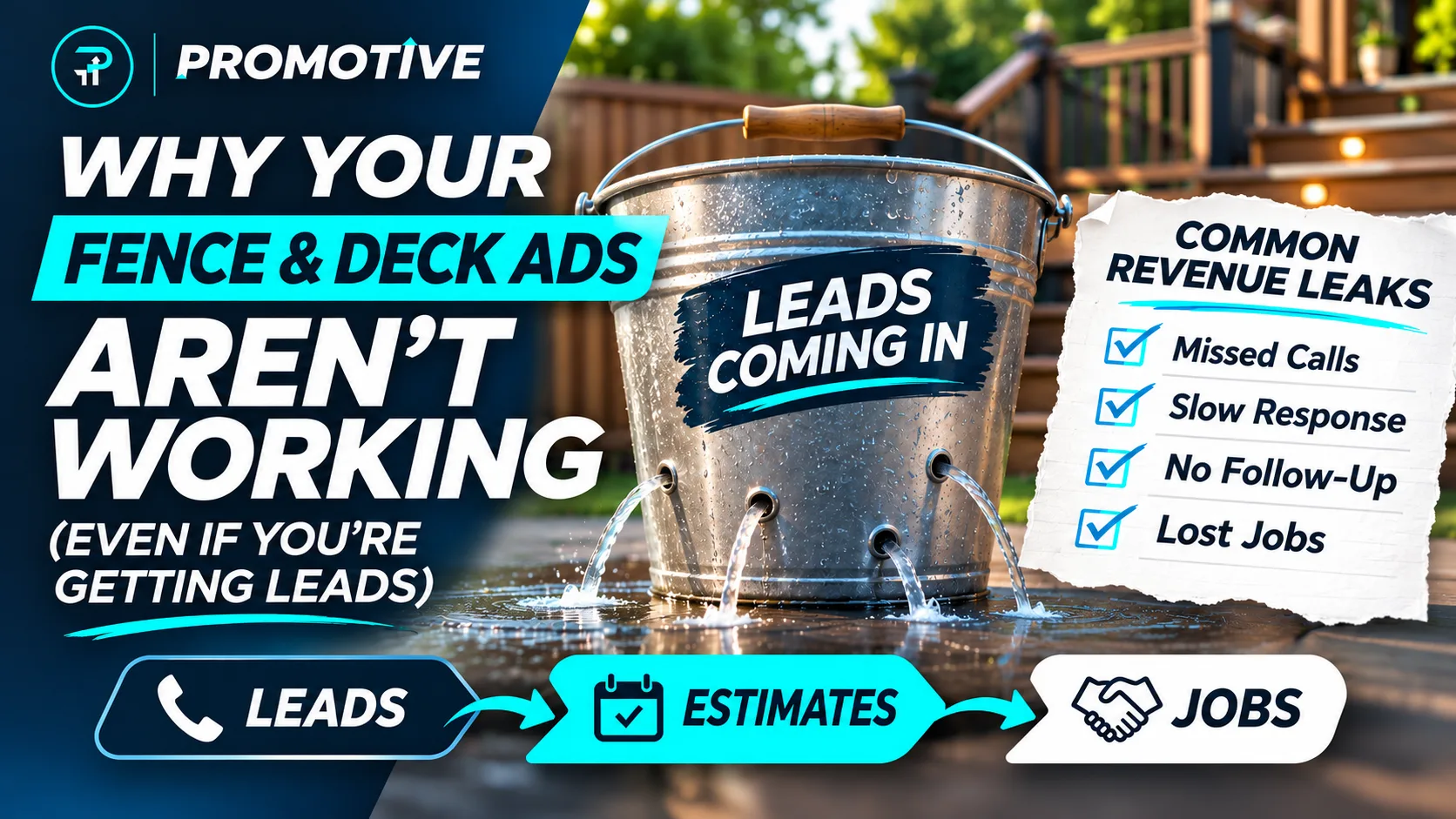
Imagine you have a five-gallon bucket with a few holes in the bottom.
You can keep pouring more water into it, but until you fix those holes, you're going to keep losing water.
Marketing works the same way.
If you're missing calls, responding slowly and forgetting to follow up on estimates, spending more money on Google or Facebook Ads can create more of the same problem.
Here's a hypothetical example of two fence companies getting the exact same number of leads in a month.
Company A
Company B
Company B didn't spend more money on advertising. They didn't receive better leads or even have a higher estimate close rate.
They simply did a better job of turning inquiries into estimates.
That's what stronger systems can do for your business.
This isn't just theory. In a planning conversation with MAP Quality Fencing & Decks, we worked through what happened between a new inquiry and a sold project, including calls, estimates and follow-up. The goal was to make the process clear enough that each opportunity had a next step instead of relying on someone to remember it. (MAP is a Promotive client.)
“Sometimes your fence and deck company doesn't need more leads. It needs a better system behind the leads it already has.”
Peyton Roop
Founder of Promotive
One of the biggest mistakes contractors make is assuming that when a homeowner doesn't respond to an estimate, they're no longer interested.
Think about how many times you've opened a text message, gotten distracted and forgotten to respond.
Your customers are no different.
They have kids, jobs, vacations and other financial decisions to make. Their new fence or deck is important to them, but it isn't necessarily their biggest priority that day.
Following up doesn't mean you're desperate for work. It means you're available to help.
Here's a simple text you can send a few days after delivering an estimate:
Hey [Name], I wanted to see if you guys had a chance to look over the estimate for your project. I know life gets busy, so I just wanted to make sure you didn't have any questions or anything you'd like me to walk you through. Happy to help!
Sometimes that's all it takes to get the conversation going again.
Here's what I'd challenge you to do this week.
Pull up the last 20 leads your marketing generated and ask yourself:
Your answers will usually point to one of three problems.
1. Wrong inquiries. Your marketing is attracting homeowners outside your service area or people looking for work you don't want, like small repairs when you're after full installs. If you're advertising composite decking and getting calls for gutter repairs, your targeting, service areas or keywords need attention. This one really is an advertising problem.
2. Poor response. The inquiries are legitimate, but they aren't reaching someone fast enough or getting a clear next step. Missed calls, slow callbacks and weekend forms that sit until Monday all live here.
3. A weak estimate-to-sale process. The homeowner gets a quote but needs more explanation, more follow-up or more help deciding. Look at your sales conversations, how your proposal explains the options, your pricing and what happens after the estimate goes out.
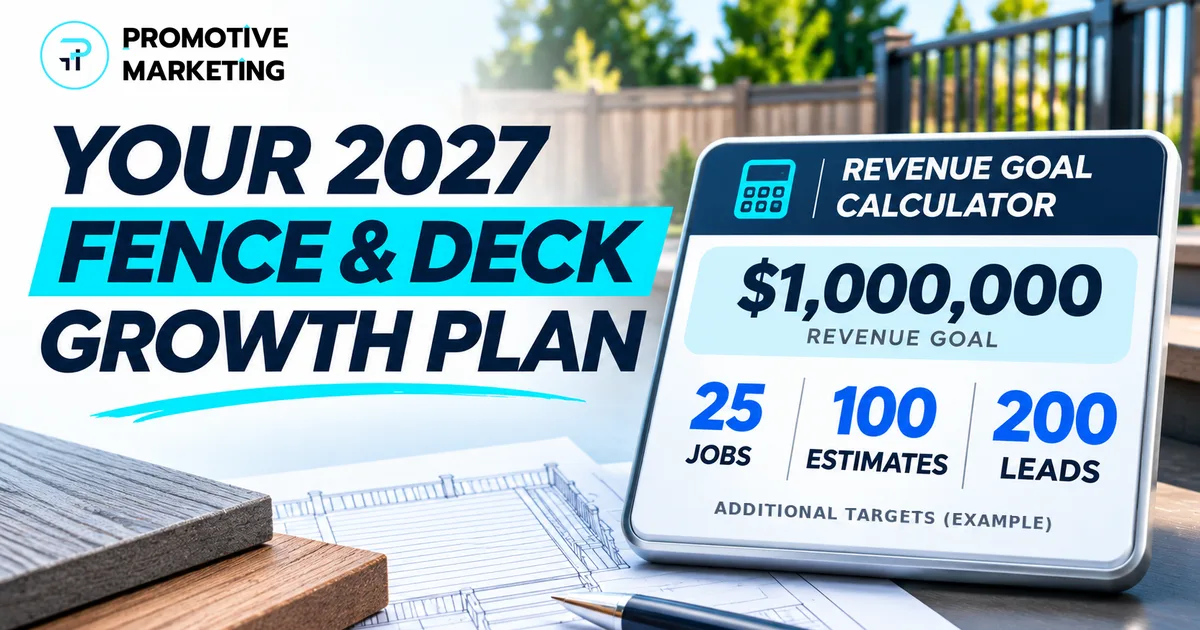
You can't fix the problem until you know which one it is. Once you know your numbers, the Revenue Goal Planner shows how many leads, estimates and signed jobs it takes to hit your goal for the year.
You don't need to overhaul your entire business to improve your results.
Start with four simple things:
That's one of the problems we help contractors solve through LeadSpree: managing leads, responding to missed calls and following up consistently without having to remember every conversation.
Whether you're using LeadSpree, another CRM or a simple spreadsheet, the goal is the same.
Make sure good opportunities aren't falling through the cracks while you're busy doing the work.
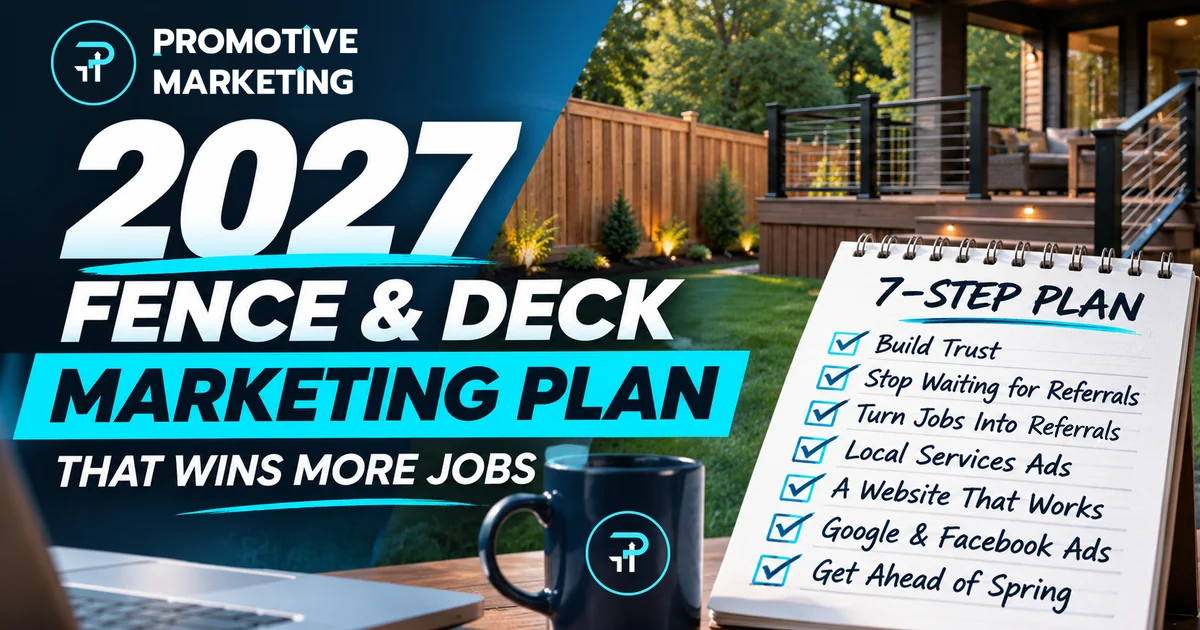
Before you increase your advertising budget, take care of the opportunities you've already earned. If you're mapping out next year too, our 2027 Fence & Deck Marketing Plan walks through what to build and in what order.
Because sometimes your fence and deck company doesn't need more leads.
It needs a better system behind the leads it already has.
Not sure whether your advertising or your follow-up is costing you jobs? Book a free Growth Gameplan with Promotive. We'll help you figure out where the problem is and what to fix first.
Free Tools
Weekly Growth Tips
One practical idea a week for fence and deck owners. Short, free and useful.
Get the TipsWritten By
Peyton Roop
Founder, Promotive Marketing