Ready to grow beyond referrals? Here's where to start marketing your fence and deck company in 2027, from reviews and referral partners to Local Services Ads and a winter gameplan.

Peyton Roop
Founder, Promotive Marketing
Published
You've built a reputation for doing good work. Your customers are happy, your guys take pride in their craftsmanship, and referrals have helped you get your business where it is today.
But you're ready to grow.
The challenge is knowing where that additional work is going to come from.
Referrals are great, but you can't always build an installation schedule around waiting for someone to mention your name.
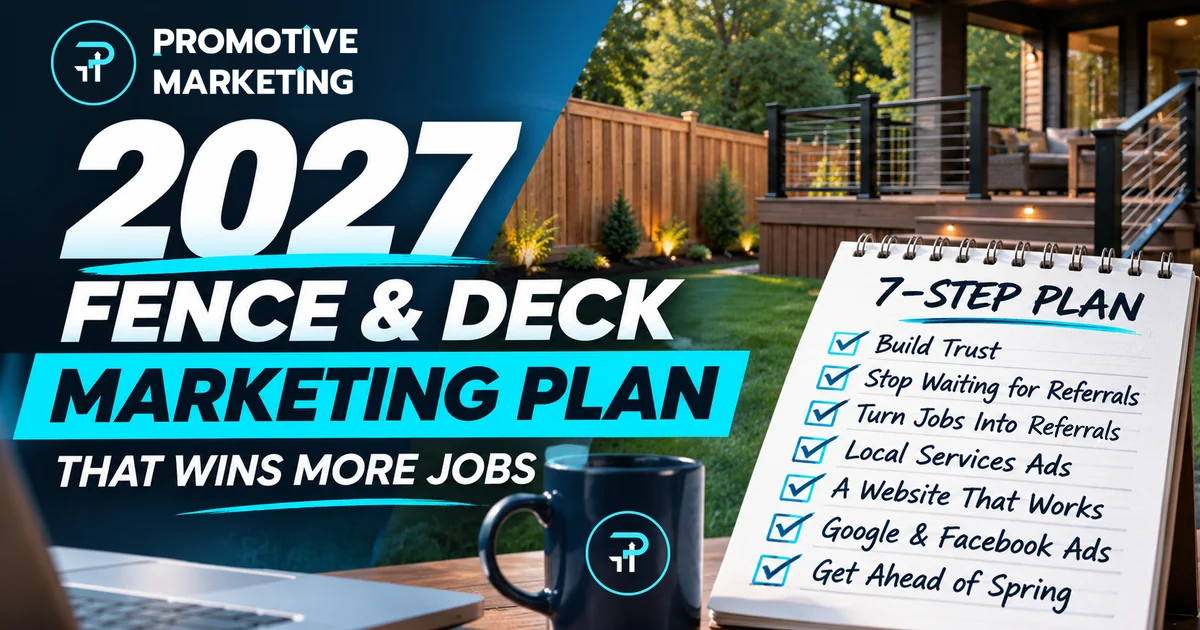
If I were putting together a marketing plan for a fence and deck company heading into 2027, here's what I'd do and the order I'd do it in.
Pull out your phone and search for a fence or deck company in your area.
Look at the Google Business Profiles that come up. Compare their reviews, project photos and websites against yours.
If you were the homeowner, who would you call?
Take 10 minutes to check these five things:
Before spending money getting more homeowners in front of your business, make sure you're giving them a reason to hire you.
We generally recommend working toward 20 to 25 genuine Google reviews before making a significant advertising investment. That's our recommendation, not a Google requirement.
Here's a text you can send to past customers today:
Hey [Name], it's [Your Name] with [Company]. Hope everything is going great with your fence! If you have a minute, we'd really appreciate an honest Google review about your experience working with us. Here's the link: [Review Link]. Thanks again for trusting us with your project!
Make requesting honest reviews part of every completed installation.
Don't spend money attracting homeowners if you haven't given them a reason to trust you.
One of my favorite examples of professional partnerships comes from MAP Quality Fencing & Decks, a fence and deck company we work with.
They've developed a relationship with 10X Pools.
When homeowners are considering a pool, the pool company shows them pictures of decks MAP has built around pools. MAP also recommends the pool company when the opportunity arises.
They're both getting in front of homeowners who are already investing in their backyards.
Think about who works with your ideal customers before or after you do:
Start by reaching out to five people you already know.
Here's a conversation starter:
Hey [Name], I've been thinking about how we could help each other out. We work with a lot of homeowners looking to improve their backyards, and I know you do too. Would you be open to grabbing coffee and talking about how we could send work each other's way?
You can also be more intentional about staying in touch with past customers.
Reach out, ask how their project is holding up and take care of any concerns they have.
When it's appropriate, ask:
We really enjoyed working with you guys. If we could have 10 more customers like you this year, we'd be happy. Do you know anyone who's thinking about getting a fence or deck in 2027?
You've already earned the trust of these people. Don't overlook the value of those relationships.
We call this the STAR Pattern.
On your next installation, introduce yourself to the two neighbors beside the property and the three across the street.
Hand them your business card and say:
Hey, I'm [Name] with [Company]. We're installing a fence for your neighbor over the next couple of days. I just wanted to introduce myself and give you my number. If you need us to move a truck or there's anything we can help with while we're here, just give me a call.
That's it. You're not trying to sell them a fence.
You're introducing yourself, demonstrating professionalism and giving them someone to call when they need work done.
Imagine completing 100 installations throughout 2027.
Hypothetical example:
These aren't guaranteed results. But imagine generating three additional jobs simply by introducing yourself to people who live around your existing projects.
Respect homeowners' privacy and local solicitation rules.
Make it about being helpful and being a good neighbor. The opportunities can come from there.
“The goal isn’t to be on every advertising platform. It’s to build a marketing system that helps homeowners find you, trust you and hire you.”
Peyton Roop
Founder of Promotive
When contractors ask me which advertising platform I'd start with, I typically recommend Google Local Services Ads, assuming their company is eligible and their foundation is ready.
These ads can appear prominently when homeowners search for local contractors, and you're generally paying for leads rather than website clicks.
The homeowner is already looking for someone to help with their project.
Before launching, be intentional about the types of jobs you want.
If you're trying to sell $20,000 composite decks, you don't want to spend your advertising budget generating calls for small deck repairs you don't offer.
Here's an example of a simple campaign plan.
Check your Local Services Ads eligibility before depending on this platform as a primary lead source.
Make sure you've got someone responsible for handling the leads before you start paying for them.
You shouldn't have to pay for every homeowner who finds your company.
Your website and SEO should help you get discovered when people search for the specific services you offer.
Instead of putting everything on one generic services page, build useful pages around the work you want more of.
That might include wood fencing, vinyl fencing, aluminum fencing, composite decking or deck replacements.
But don't just list the services.
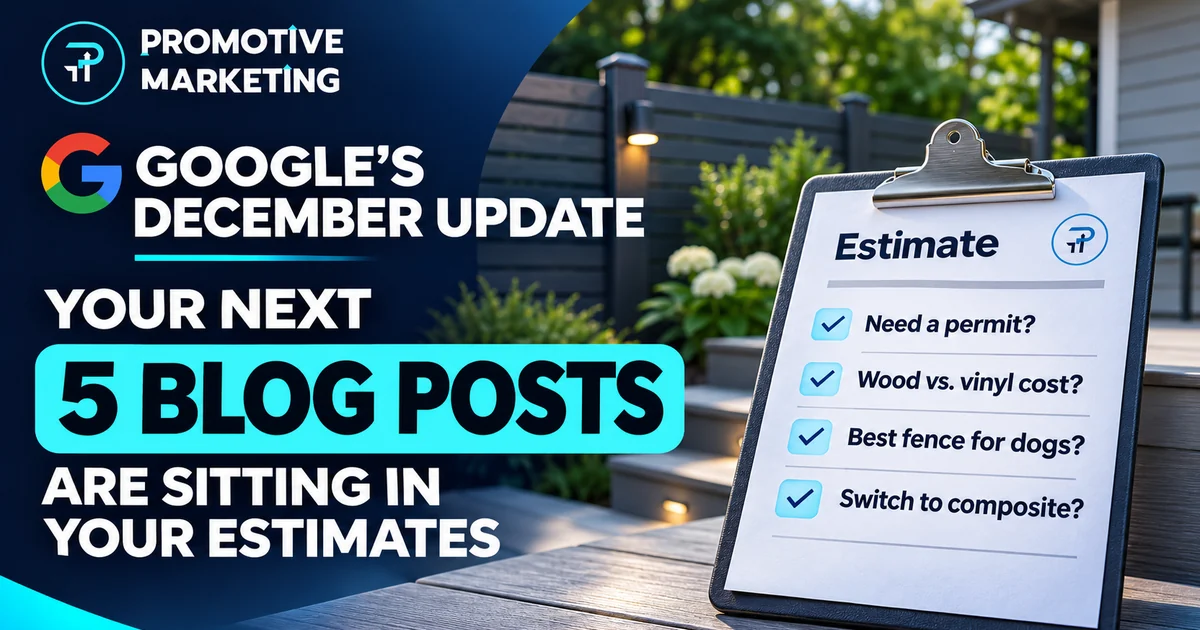
Think about the questions homeowners ask during estimates.
What's the difference between wood and vinyl fencing? Can we use our existing deck frame? What affects the price of composite decking?
Those are the same questions your website should be answering.
Here's a simple template you can use for each completed project:
Add real project photos with permission and publish that information on your website.
You can also use those photos and project details on your Google Business Profile and social media.
The work you're completing today should help you sell the work you'll complete tomorrow.
Google Ads and Facebook Ads can both work for fence and deck companies, but they're reaching homeowners in different situations.
Someone searching for a composite deck installer on Google already knows they want a deck.
Someone scrolling through Facebook might see a picture of your latest project and start thinking about what their own backyard could look like.
Here's how I'd approach the two platforms.
Google Ads:
Facebook & Instagram Ads:
With Google Ads, focus on the searches that match the jobs you want. Avoid paying for unrelated searches such as DIY instructions, employment opportunities or materials for sale when those aren't relevant to your business. Google's negative keywords help with that.
With Facebook, start with real project photos and a compelling reason for homeowners to reach out.
Here's an example Facebook ad message:
Still thinking about upgrading your backyard? We're scheduling composite deck projects for spring 2027. Let's talk about what you've been envisioning and put together some options for your home.
Only advertise scheduling availability that's actually available.
You don't need to launch both platforms simply because someone told you that you should.
Start with the one that makes the most sense for your business and make sure you understand what it's producing before investing more money.
Imagine two advertising campaigns.
One generates 40 leads for $2,000. The other generates 15 leads for the same investment.
Which one is working better?
Most people would assume the first one. But what if the second campaign is generating more sold jobs?
Hypothetical results, Campaign A:
Hypothetical results, Campaign B:
The second campaign generates fewer leads but produces three times as many sold jobs.
That's why your marketing report should tell you more than how many people clicked, called or filled out a form.
Track your leads, estimates, signed jobs, sold revenue and marketing costs by source.
Make sure every genuine inquiry gets a response and every outstanding estimate has a next step.
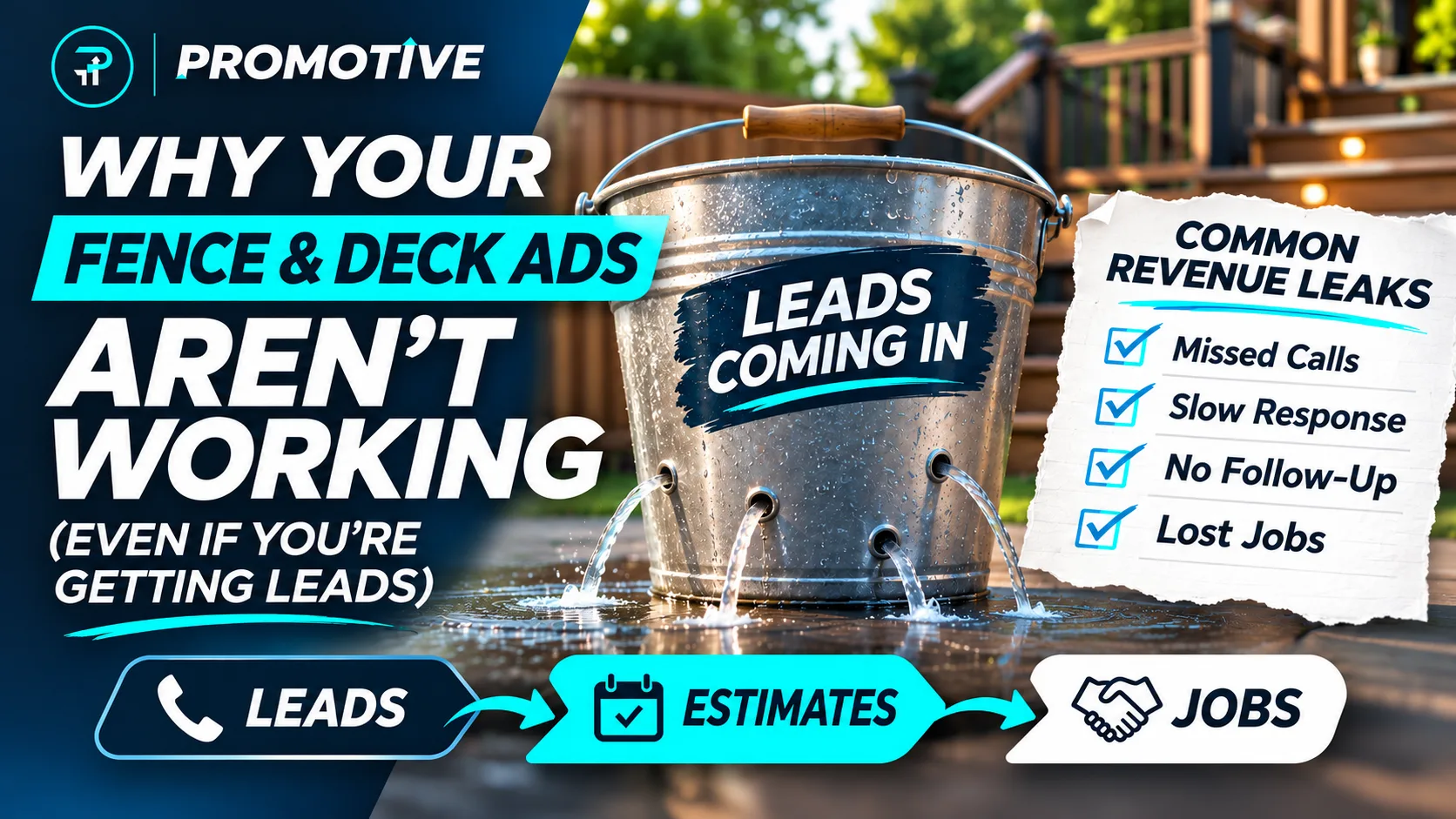
If you're already getting leads but struggling to turn them into jobs, read our guide on why your fence and deck ads aren't working.
The goal isn't to generate the cheapest leads. It's to generate profitable work.
One of the biggest mistakes you can make heading into winter is shutting everything down and waiting until March to start looking for work.
Go back through your outstanding estimates from 2026.
Some homeowners weren't ready financially. Others ran out of time or decided to wait until spring.
Here's a text you can send:
Hey [Name], it's [Your Name] with [Company]. Are you guys still thinking about getting that fence installed? We're starting to schedule our spring projects, and I'd love to help you get a date that works for you if you're still interested.
If you've got 50 outstanding estimates, you've already got 50 opportunities to revisit with people who previously expressed interest in your services.
Start there before spending more money trying to find new homeowners.
Respect their communication preferences and stop following up when they decline.
Just because your installation season slows down doesn't mean your selling season has to.
You don't need to launch everything at once.
Here's how I'd use the next three months to prepare for the spring installation season.
Keep using the STAR Pattern on active projects and building useful website content throughout the year.
Adjust your marketing investment around your local climate, crew capacity, available cash and installation schedule.
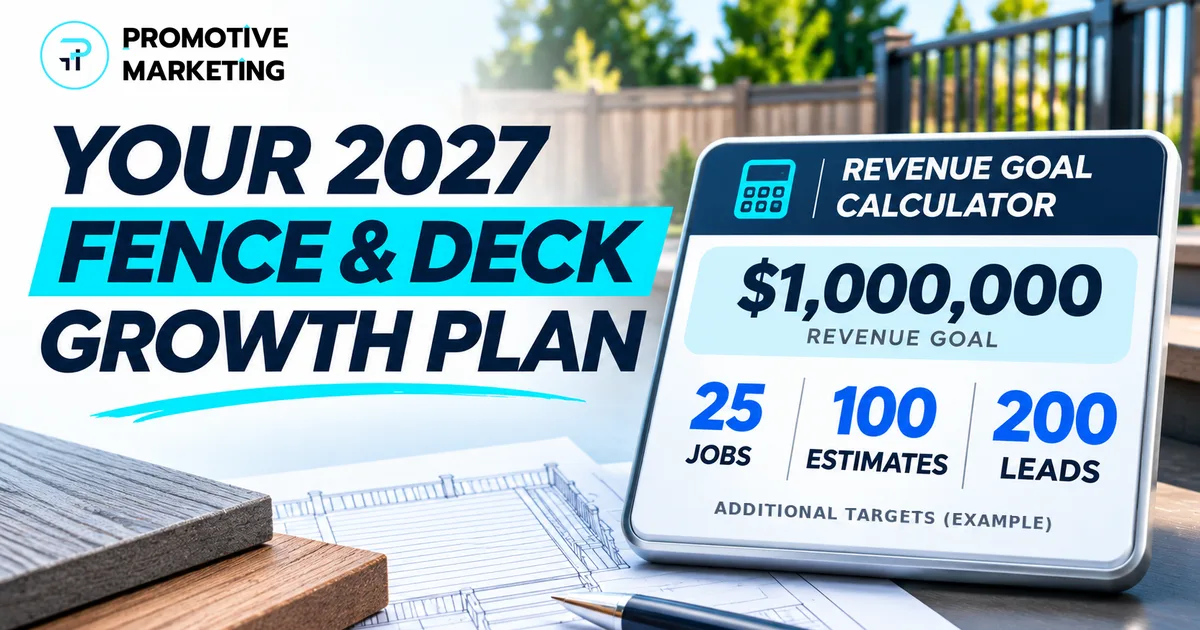
Before deciding how much to invest in marketing, you need to know what your business is working toward.
How many jobs do you need to sell? How many estimates will that require? Can your crews handle the additional work?
If you haven't worked through those numbers yet, start with our 2027 Fence & Deck Business Goals guide and free interactive growth calculator.
Once you understand your targets, identify which area of your marketing needs attention first.
At Promotive, we approach growth through four areas:
You don't need to launch five advertising campaigns, rebuild your website and hire another salesperson tomorrow.
Start with the area that's holding you back the most.
Don't build your entire marketing plan around one source of work. Build a system that helps homeowners consistently find you, trust you and hire you.
Need help figuring out where to start in 2027? Book a free Growth Gameplan with Promotive. We'll walk through your business, help you understand what's holding growth back and put together a plan you can act on whether you hire us or not.
MAP Quality Fencing & Decks is a Promotive client.
Free Tools
Weekly Growth Tips
One practical idea a week for fence and deck owners. Short, free and useful.
Get the TipsWritten By
Peyton Roop
Founder, Promotive Marketing